 Jan Slifka
FAIR Wizard is designed to support researchers and institutions in creating Data Management Plans (DMPs) and other research-related documents in a structured, reusable, and FAIR‑aligned way. It is widely used for producing DMPs compliant with Horizon Europe, national funders, and institutional requirements.
From our experience working with research communities, we see that many questions and frustrations do not stem from missing features, but from a natural misunderstanding of how FAIR Wizard is structured. This post aims to clarify the core concepts, explain why certain situations occur, and help users get the most out of the platform.
This article explains how FAIR Wizard is designed, why certain behaviors may be surprising at first, and how to avoid the most common misunderstandings when creating Data Management Plans.
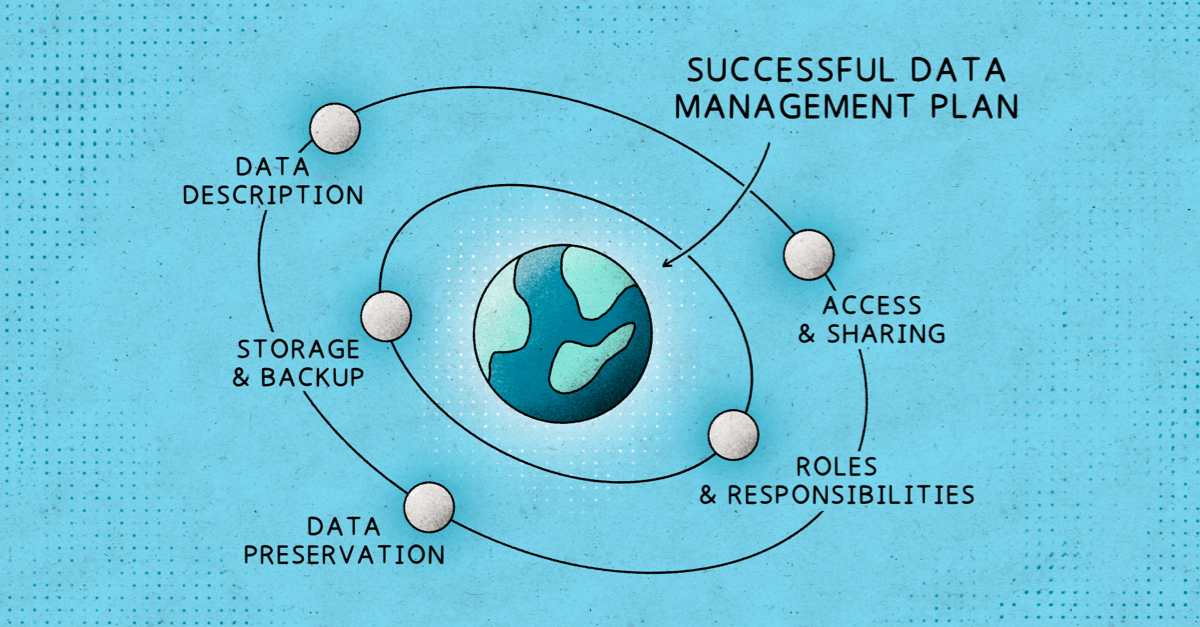
At its core, FAIR Wizard is not a single DMP generator or a fixed Horizon Europe solution. Instead, it is a framework that separates:
This separation is intentional. It allows the same collected information to be reused for different purposes, funders, and formats, without repeatedly filling in similar content.
Understanding this design is key to understanding FAIR Wizard.
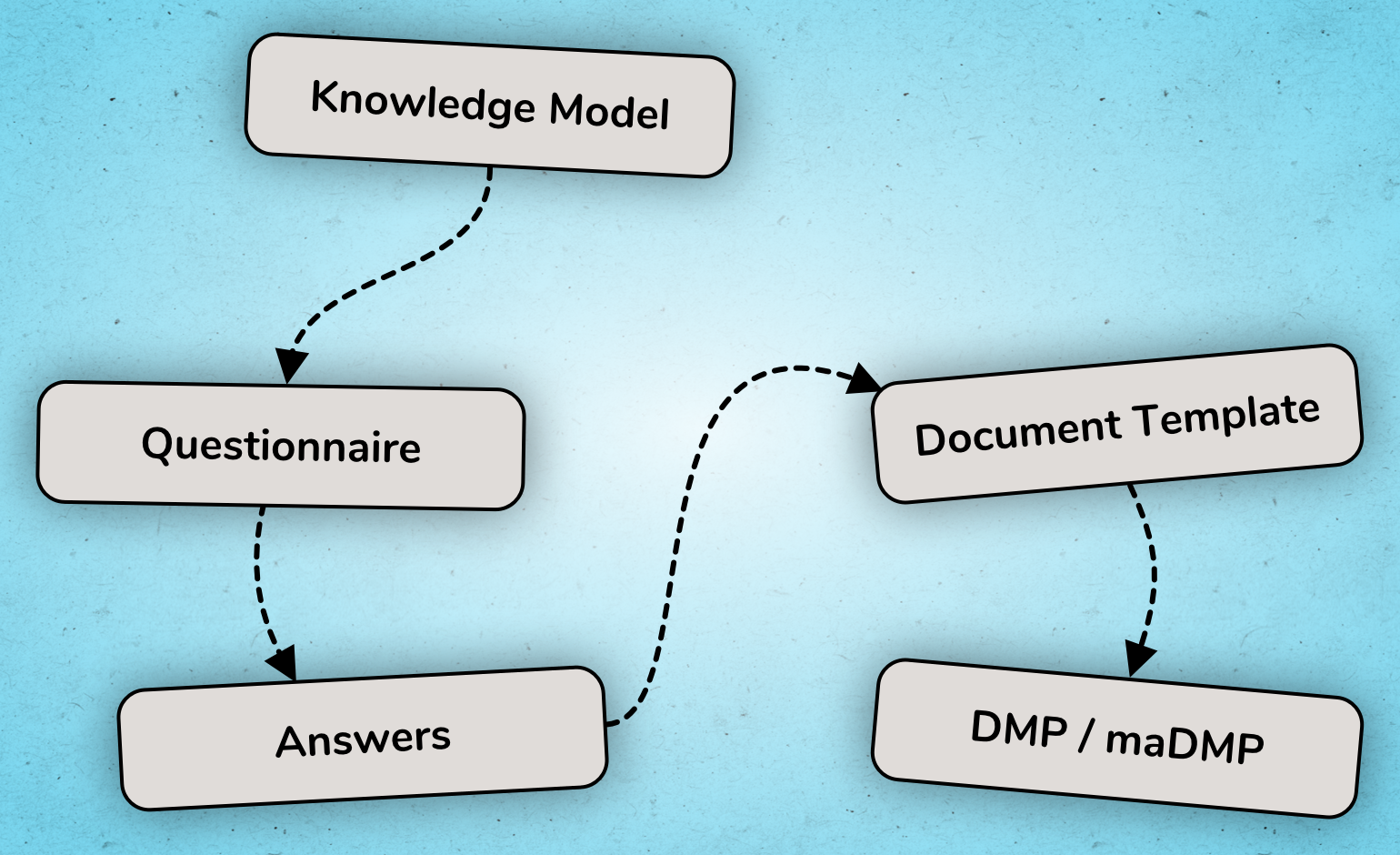
A Knowledge Model defines the structure of a questionnaire:
Researchers interact with FAIR Wizard primarily through these questionnaires. They do not write a DMP directly; instead, they provide structured answers that can later be reused.
If this concept is new to you, we explore it in more depth in the blog post Demystifying Knowledge Models.
Knowledge Models are intentionally flexible and customizable. Institutions can:
A Document Template defines how answers from a questionnaire are transformed into an output document.
This includes:
Examples include:
Because different funders and use cases have different requirements, one questionnaire can be paired with multiple Document Templates.
A common point of confusion arises when users notice that not all answers they provided appear in the generated DMP.
This typically happens when using default Document Templates, such as the Horizon Europe DMP template. These templates are designed to:
As a result, they intentionally use only a subset of the available questions from a Knowledge Model.
This behavior is expected and allows FAIR Wizard to:
The broader challenge of aligning diverse funder requirements with reusable content is discussed in Dealing with Diversity of Data Management Plan Templates.
FAIR Wizard provides default Knowledge Models and Document Templates to help users get started quickly. These defaults:
At the same time, research practices vary widely across disciplines and institutions. For that reason, default content is best seen as a baseline, not as a constraint.
Many organizations therefore:
FAIR Wizard is designed to support exactly this kind of evolution.
Another recurring question is how to keep FAIR Wizard intuitive for researchers who simply want to create a DMP, without learning the underlying concepts.
This is where Project Templates play an important role.
A Project Template can:
In many institutional setups, researchers work exclusively with Project Templates, while data stewards handle configuration and customization behind the scenes.
For a practical guide, see How to Effectively Set up Project Templates in FAIR Wizard.
A useful analogy is presentation software.
The application provides the tools and structure. Default slide designs are included to help you start quickly. If the default design does not match your needs, you adapt or replace it. You do not replace the presentation tool itself.
FAIR Wizard follows the same principle for data management planning.
FAIR Wizard's strength lies in the clear separation between platform and content.
This separation enables Data Management Plans to evolve over time, answers can be updated, reused, and rendered into new formats as requirements change. We describe this approach in more detail in Composing (Data Management) Plans as Living Documents.
Once this distinction is clear, it becomes much easier to understand why certain outputs look the way they do, and how to adapt them when requirements change.
Whether you are creating a Horizon Europe DMP, a national grant application, or an internal project document, FAIR Wizard is designed to grow with your needs rather than limit them.

