 Kryštof Komanec
Open Science has moved from an ideal to an expectation in modern research. Funders require it. Institutions promote it. Researchers increasingly recognize its value. At its core, Open Science aims to make research more transparent, accessible, reproducible, and reusable.
At the same time, Data Management Plans (DMPs) have become a standard requirement in research funding and institutional governance. Yet many researchers still treat Data Management Planning as administrative paperwork rather than as a strategic research tool.
In reality, Open Science and Data Management Planning are deeply interconnected. A well-designed Data Management Plan (DMP) is one of the most practical mechanisms for turning Open Science principles into everyday research practice.
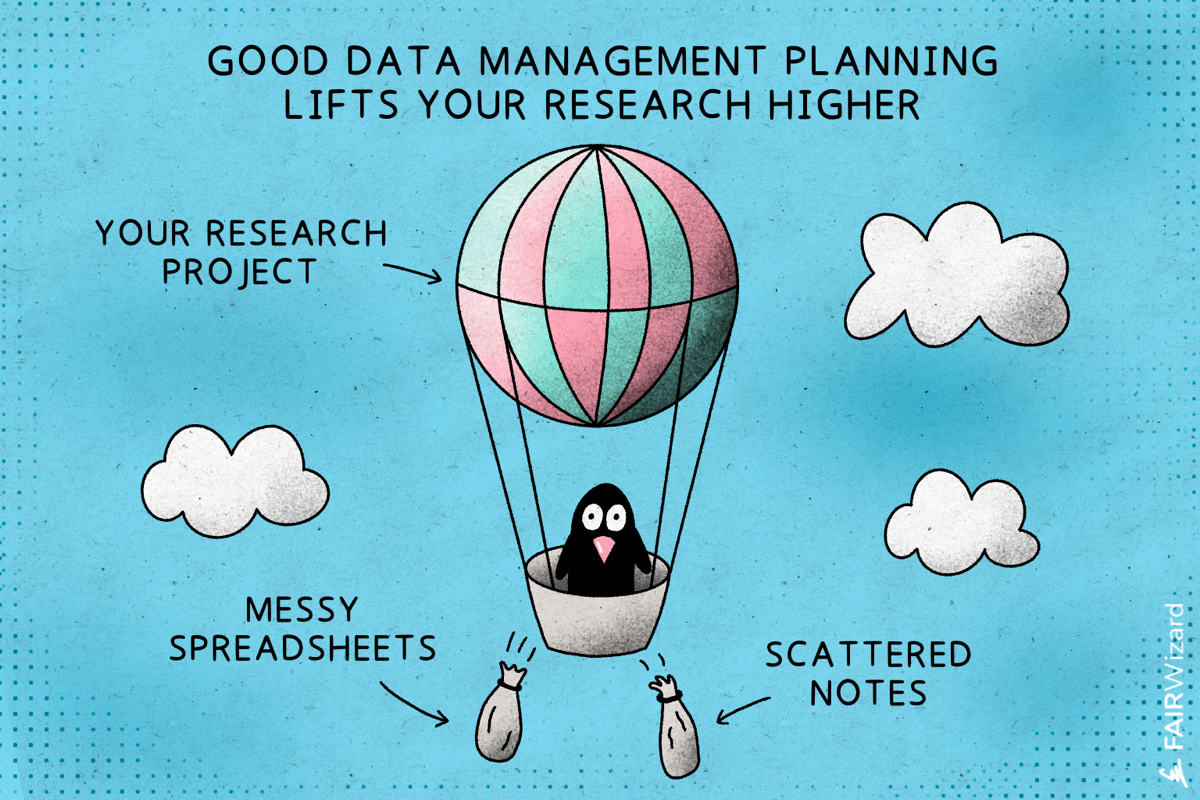
Open Science promotes openness across the research lifecycle. This includes open access publishing, sharing research data, enabling reproducibility, and supporting collaboration. However, openness without structured Data Management Planning quickly leads to inconsistency, risk, and confusion.
To share research data responsibly and effectively, practical decisions must be made early:
These are operational decisions that directly affect research quality and compliance. This is exactly where Data Management Planning and the DMP process become essential.
A Data Management Plan formalizes how research data will be handled throughout a project lifecycle. Effective Data Management Planning forces clarity from the beginning. Instead of waiting until publication to think about sharing, preservation, and FAIR alignment, researchers define workflows, responsibilities, standards, and repositories at project start.
This early planning has several concrete effects.
First, it improves transparency in Open Science practices. When data collection methods, file formats, metadata standards, and documentation processes are defined upfront, research becomes easier to understand, evaluate, and reuse.
Second, it supports the FAIR data principles. Making research data Findable, Accessible, Interoperable, and Reusable does not happen automatically. It requires deliberate decisions about metadata standards, persistent identifiers, repositories, licensing, and access conditions. A DMP captures and structures these decisions.
Third, it strengthens reproducibility. Reproducible research depends on well-documented data, preserved materials, and traceable workflows. Without structured Data Management Planning, these elements are often fragmented or incomplete.
Open Science is frequently misunderstood as unrestricted release of all research data. In reality, responsible openness requires balance. Sensitive data, personal data, confidential information, and intellectual property must be managed carefully. Ethical, legal, and regulatory constraints are integral to good Research Data Management.
A well-developed Data Management Plan (DMP) helps balance openness with responsibility. It clarifies which datasets can be shared, under what conditions, with what safeguards, and through which repositories. In doing so, Data Management Planning supports not only openness, but also compliance, data protection, and institutional risk management.
In many funded projects, the DMP is written once to satisfy a requirement and then forgotten. This approach limits its potential impact.
When used strategically, Data Management Planning becomes a governance and coordination framework. It aligns research teams on data roles and responsibilities. It reduces ambiguity about storage, backup, and version control. It prevents fragmentation of research data across personal devices and unmanaged systems. It supports long term preservation in trusted repositories aligned with Open Science and FAIR standards.
Most importantly, it transforms Open Science from policy language into operational practice.
Open Science cannot be retrofitted at the end of a project. If metadata was never created, if documentation was inconsistent, or if storage decisions were improvised, openness becomes technically and practically difficult.
Early Data Management Planning ensures that FAIR data, openness, and reproducibility are embedded into research workflows from the start. It reduces technical debt, improves long term data value, and increases institutional readiness for reporting and compliance.
Open Science defines the direction modern research is heading. Data Management Planning provides the operational roadmap.
When aligned, they reinforce each other. Open Science gives purpose and strategic context to the Data Management Plan. The DMP provides structure and accountability to Open Science ambitions.
Together, Open Science and structured Data Management Planning support research that is more transparent, more reusable, more reproducible, and more sustainable across institutions and disciplines.

