 Kryštof Komanec
Institutions often run FAIR Wizard for researchers who work in different languages. The interface already supports translations, but there hasn't been a good way to offer the questionnaire itself in several languages. Institutions could use a single language or maintain separately translated Knowledge Models. That meant either asking some researchers to work in a less familiar language or keeping several copies of the same questionnaire up to date.
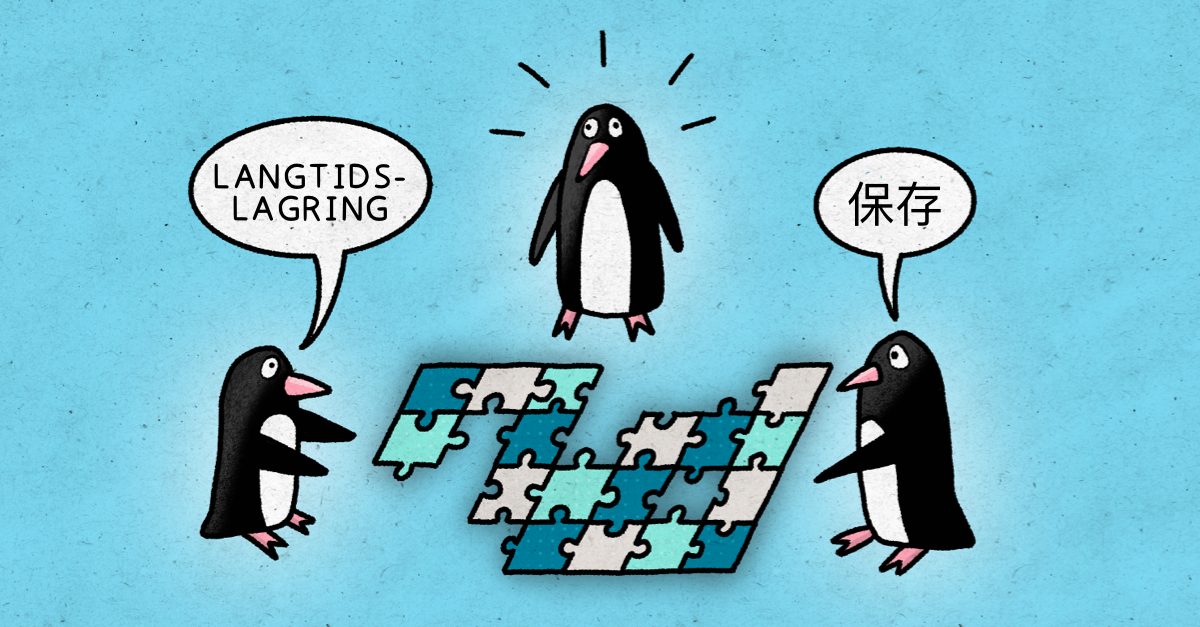
We are adding Knowledge Model localizations to make this easier. A Knowledge Model, which defines the questionnaire and its guidance, can now include translated questions, guidance text, and answer options. Researchers can choose from the available languages for each project, while all translations share the same questionnaire structure.
To prepare a translation, a data steward exports a translation template (.pot file) from the Knowledge Model detail page. After translating the text, they import the translated file back through the Locales tab. This is where they can see and manage the translations available for that Knowledge Model.
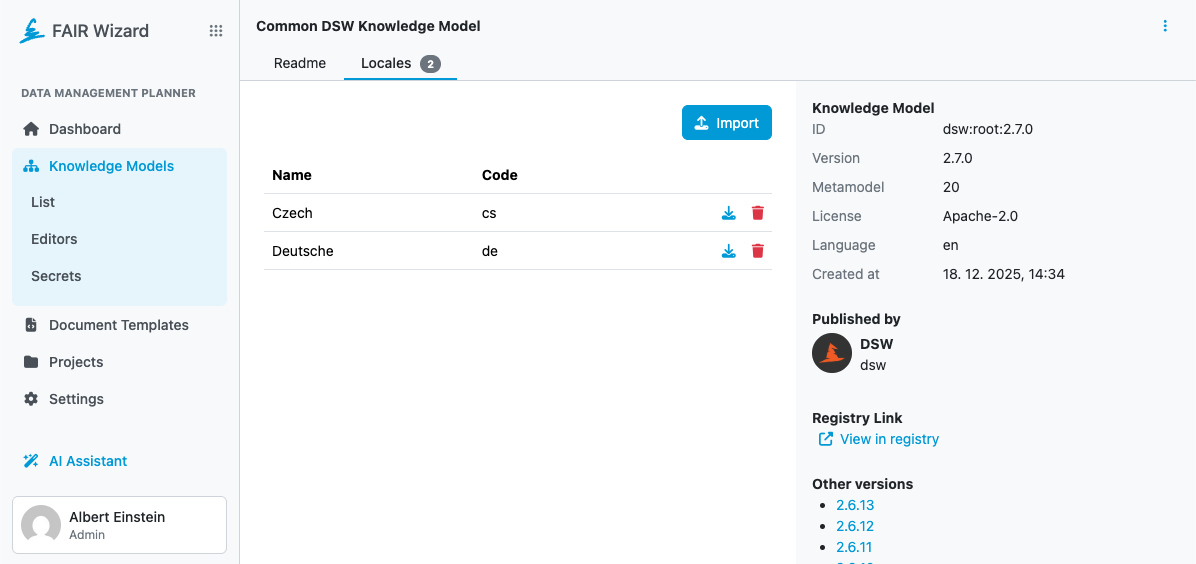
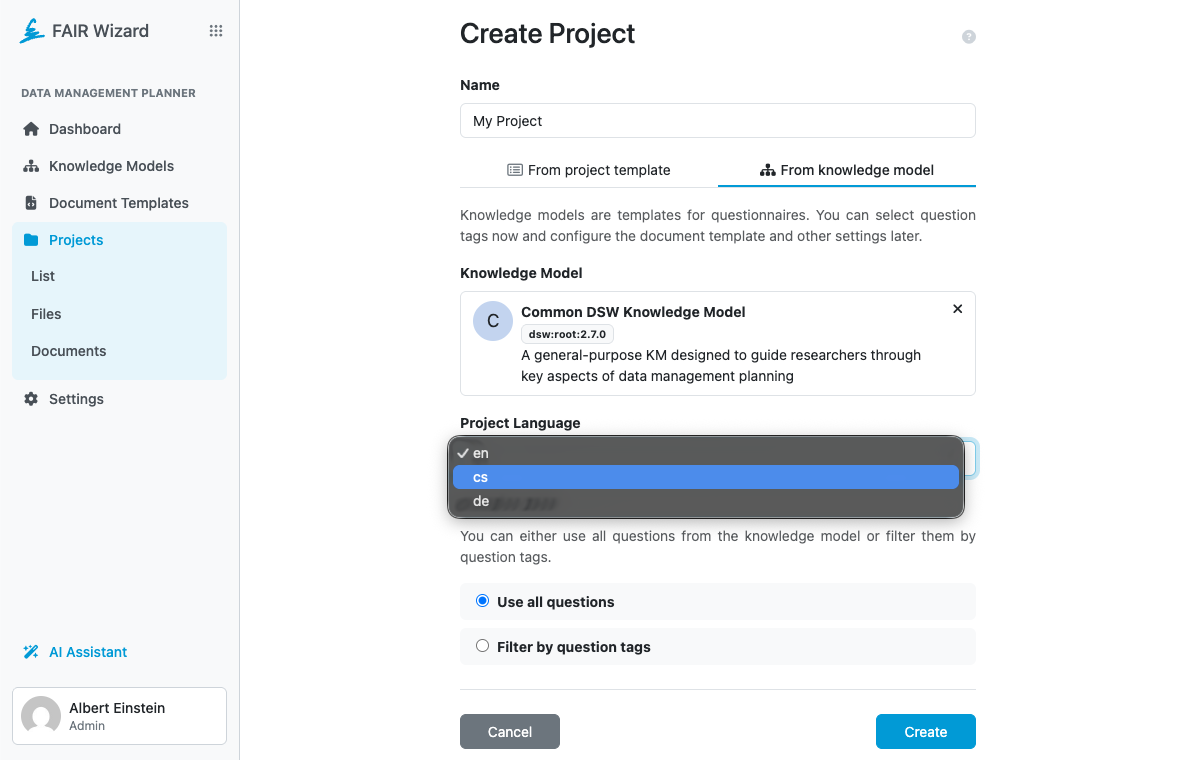
Consider a university where some researchers prefer Czech and others work in English. Once its data stewards have added the Czech translation, researchers can choose either language when creating a project. A researcher working on a local project might choose Czech, while a team with international colleagues can keep English.
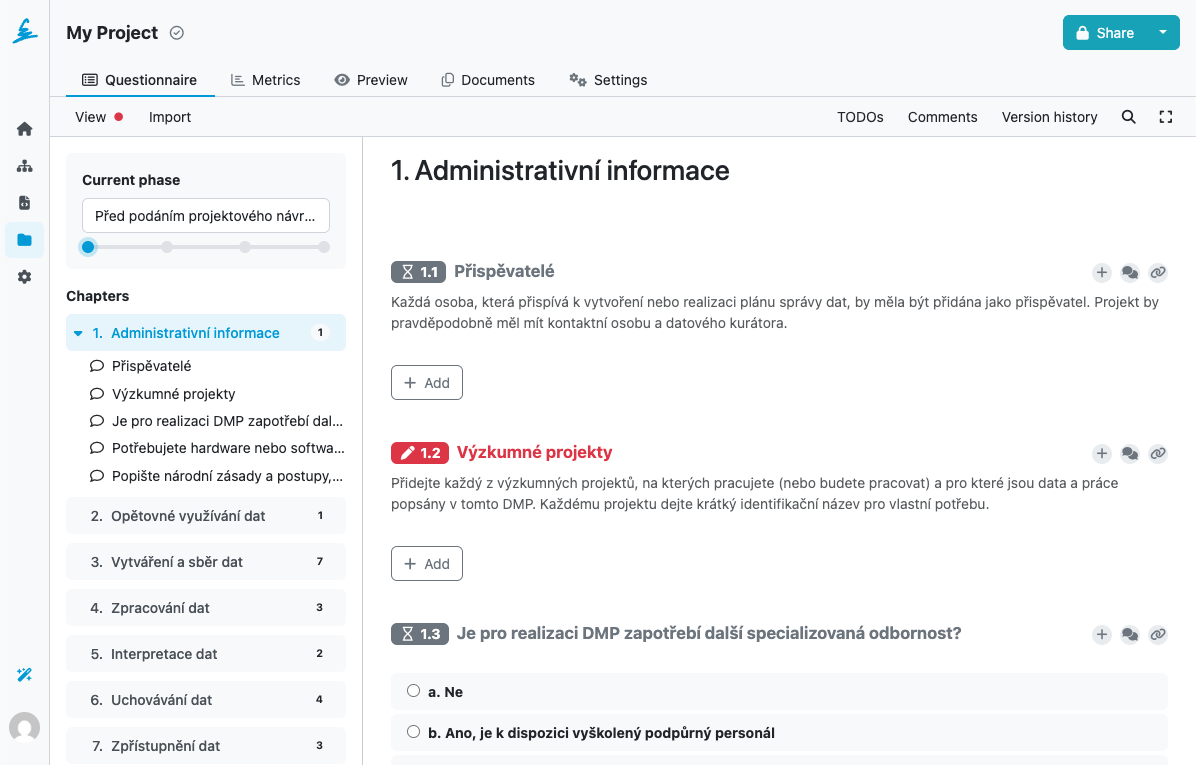
The questionnaire then displays the translated chapters, questions, guidance, and answer options. In the example below, the researcher reads the questionnaire in Czech while the application interface remains in English.
This also helps when the university updates its questionnaire. With separate Knowledge Models, adding a question means making the same change in each copy. With localizations, data stewards maintain the structure in one place and provide the wording for each language. Translations still need to be reviewed and updated as the content changes, but there are fewer duplicated changes to manage.
For researchers, this means being able to read the guidance in a familiar language, including explanations of terms they may already know from local policies or conversations with their data steward. For the support team, offering that choice no longer means maintaining a separate Knowledge Model for every language.

